
I. The Aesthetics of Innocence
[SCENE: A bedroom. 10:15 AM. A clear rectangle of morning sun sits over a faded Persian rug. HENRY THOMAS JONES sits just outside the light, his legs extended like dropped lumber, strapping a cart onto the hindquarters of TOBY.]
HENRY
Hold still.
TOBY
The floor is cold where the rug ends.
HENRY
I can hear the Miller boys pulling the wagon past the hedge.
TOBY
The wagon smells like wet asphalt.
HENRY
If they see the wheels, they always stop to wave.
TOBY
You are pulling the loose skin on my hip.
HENRY
Just keep your chin up so the frame stays down.
TOBY
The black strap is pinching the fold of my leg.
When an animal is disabled, the public reaction is almost universally directed at the creature’s well-being. A viral video of a dog in a wheelchair summons a chorus of digital applause. The owners of these pets are celebrated as heroes. The spotlight remains squarely on the animal’s resilience, and any difficulty the owner faces is viewed as a noble sacrifice rather than an excuse for harm.
Society, however, frequently frames human disability as a tragic burden. The empathy that flowed so freely toward the resilient dog is suddenly split, and in many cases, entirely redirected away from the disabled individual and toward their parents or caregivers. In cases of filicide, disability rights organizations point out a disturbing trend. Media coverage often uses phrases like “overwhelmed caregiver,” “driven to the brink,” or even “mercy killing.”
The core issue is that disabled human lives are routinely viewed through a transactional lens, evaluated by how much they cost their caregivers in time, money, and emotional energy. Disabled animals, by contrast, are seemingly allowed to just exist and be loved.
On camera, that is.
Behind closed doors, the accounting is identical: countless disabled animals are euthanized in shelters every day, simply because the medical costs or the care requirements are deemed too high.
The public loves the disabled dog because watching a two-legged terrier enthusiastically chase a tennis ball makes a human feel warm inside. It is a consumable form of inspiration. But the moment that dog develops incontinence, snaps at a child due to chronic nerve pain, or begins to look visibly miserable—the moment it stops doing the work of inspiring our empathy—the camera turns off.
This conditional empathy is deeply rooted in our social expectations. We expect animals to be permanently dependent on us. A dog relying on a human for its food, shelter, and mobility does not violate our social contract. But, humans are conditioned to view adulthood as synonymous with total independence. When a human fails to meet that metric, society recoils.
Animals are viewed through a lens of pure innocence, akin to human infants, and society is much more protective of the beings it can infantilize. Dependence becomes excusable, even endearing, when it is paired with this perceived purity.
Here, innocence is not a passive state of being; it is a tool of persuasion. To be innocent in the eyes of the public, you must possess a specific kind of moral goodness, and moral goodness requires you to be photogenic in the broadest sense of the word. You must look the part of the grateful, uncomplaining survivor.
We have found our primary feedback mechanism. The assumption creates the framing, and the framing reinforces the assumption.
II. The Path of Least Resistance
[SCENE: 11:15 AM. The sunbeam has slid to the right, abandoning Henry’s left side. A blue plastic tumbler lies on its flank; a dark, widening continent of tap water is creeping across the wool toward Henry’s thigh.]
HENRY
Look what you did.
TOBY
The cup was where my nose wanted to be.
HENRY
It’s going to soak through to the floorboards.
TOBY
My neck is tired.
HENRY
Get up, Toby, I can’t reach the sponge.
TOBY
The floor is wet.
HENRY
If I call her, she’s going to bring the yellow bucket.
TOBY
The yellow bucket smells like lemons and loud noises.
HENRY
Good boy. Stay right there. Good old boy.
Would it be too cynical—or simply correct—to suggest that our emotional responses are dictated by the underlying economics of choice?
A disabled human requires a compulsory, lifestyle-shattering expenditure of time, money, and energy. Regardless of where one falls on the spectrum of privatized versus socialized care, that cost is extracted from someone’s pocket, and the weight almost always falls upon the primary caretakers. You cannot straightforwardly murder your child to escape this math. You can, however, easily euthanize your pet.
Under the law, pets are property. The baseline economic expectation of property is simple: when maintenance costs exceed the asset’s value, you dispose of it. Euthanasia is cheap, legal, and crucially, socially invisible. We must distinguish here between what is socially acceptable and what is invisible. You don’t post about it online, but the state is not auditing your living room to keep track of your animals.
Nobody says, “The maintenance costs on my golden retriever exceeded his depreciation value, so I had him liquidated.”
They say, “We made the heartbreaking decision to put Toby to sleep.”
This brings us to a glaring discrepancy. When it comes to a disabled pet, the animal is the star of the show. The empathy argument misses this entirely. It is not that the audience lacks empathy; it is that empathy is highly selective. In the human arena, the disabled individual is sidelined, and the stars of the show become the parents.
Empathizing with the caregivers rather than the disabled child can be understood through a simple metric of relatability. The parents stand up straight, they speak cogently, and they articulate familiar, recognizable burdens.
Empathy is lazy. It flows down the path of least resistance.
This is especially true for societal empathy, which operates in stark contrast to individual empathy. Societal empathy is performative, fast-paced, and cognitively lazy. When scrolling through a feed or watching an evening broadcast, the brain does not have the time or energy to do emotional heavy lifting. This is by design. Modern platforms are built to farm engagement by ensuring that the path of least resistance leads directly to immediate reaction rather than contemplation.
Animals are perfect blank slates for human emotion. We do not truly understand them, nor do we really try. Instead, we project. Because the animal cannot speak, the projection is entirely safe. The blank slate never challenges the artist, and on some level, we know this. It is a form of objectification. They may possess life, but in the societal arena, they occupy the same emotional status as their plush toy counterparts.
Disabled humans, by contrast, are broken mirrors to the self. We cannot project our sanitized narratives onto them without confronting a deep, existential discomfort. Faced with that psychological friction, the audience recoils. Societal empathy naturally reroutes itself toward the path of least resistance, seeking an easier, more familiar vessel.
The parents win by default.
III. The Morality of an Instinct
[SCENE: 12:00 PM. The noon sun hits the rug straight down from the zenith, casting no shadows. HENRY holds a single square Nabisco saltine between his thumb and forefinger, six inches above TOBY’s snout. TOBY’s forelegs are locked, his chest vibrating with a high-frequency tremor.]
HENRY
Look at my face.
TOBY
Your fingers are white.
HENRY
Look at my eyes, Toby. Don’t look at the hand.
TOBY
The square is dry.
HENRY
If I put this back in the tin, would you still sit like that?
TOBY
My front paws are burning.
HENRY
Say you’re staying for me. Promise it isn’t the cracker.
TOBY
I am looking at the salt.
To say a disabled person challenges the viewer’s own able-bodiedness is a slight error. For most, the discomfort is never allowed to reach that deep into the psyche. Before any existential reflection can occur, an innate repulsion—a subconscious distancing—hijacks the reaction.
A psychologist might diagnose this as the behavioral immune system defending the host. A philosopher might identify it as the creation of the Other. A sociologist might label it Biopolitics or Out-Grouping. Regardless of the terminology, the mechanism serves a primitive function: the tribe is recoiling to protect its perceived viability.
This reflex is entirely absent in our interactions with animals. We do not possess an intra-species distancing reflex triggered by a dog missing a leg. We do not look at a limping terrier and subconsciously evaluate its physical fitness as a reflection of our own human tribe’s genetic health. We already categorize the dog as a separate species. Because that boundary is impenetrable, there is no urge to push the animal away to protect our own status. The dog is safe to pity precisely because it is definitively not us.
This exposes a flaw in how we moralize human connection. Empathy, much like the distancing reflex, is biologically determined. Its sheer speed and its uniform, collective calibration should give the game away. These are the hallmarks of a raw instinct, not a deliberate, moral choice. When we witness someone sustain a physical injury, we wince. We do not deliberate on the ethics of their pain; our mirror neurons fire before the conscious brain fully registers the event.
Therefore, judging a human being’s moral goodness by their capacity for affective empathy is akin to judging their character by how fast their leg kicks when a doctor strikes their knee with a rubber mallet. It is a nervous twitch dressed up in the costume of a virtue.
Were it not for the normative weight society places upon this reflex, this biological quirk would not even merit a discussion. But we have elevated it to the standard of human goodness. Which philosophical system suffers the most under this revelation? Utilitarianism. This is the trap of a system that labels pleasure as good and discomfort as bad. It treats morality as an aesthetic preference. And the utilitarian aesthetic is at its core, terrifyingly reductionist.
To salvage the sanctity of empathy, defenders often pivot to “Cognitive Empathy.” We must be precise here: cognitive empathy is not empathy. It is the deliberate, often exhausting process of overriding and re-wiring the initial reflex. It is a completely different cognitive operation.
Here lies the underlying truth of the dynamic. Loving the disabled human requires practice. It demands the conscious effort of overriding the behavioral immune system and engaging the rational mind. Loving the disabled dog merely requires reception. You simply stand there and let the warm, uncomplicated reflex wash over you.
IV. All This to Reject the Machine
[SCENE: 4:30 PM. The sun has left the wool. The bedroom is settling into the flat, gray monochrome of late afternoon. HENRY leans forward until his forehead touches TOBY’s brow, staring directly into the black of the dog’s left pupil.]
HENRY
I can see myself in your eye, but I’m all stretched out like a spoon.
TOBY
Your breath is too close to my whiskers.
HENRY
You don’t even know my name, do you?
TOBY
My left hip is stiffening.
HENRY
You know what I’m thinking, don’t you?
TOBY
Your mouth smells like the orange medicine.
HENRY
Yeah. I knew you did.
The conflation of empathy with goodness is an inheritance. We are trapped in the crossfire of two distinct, highly incompatible schools of Western thought, the first of which is Utilitarianism.
We rarely apply Utilitarianism, the pursuit of the greatest good for the greatest number, to our internal emotional economies. Yet, this is exactly how societal empathy functions. When society directs its empathy toward a disabled dog, the emotional return on investment is remarkably high. It feels good. It generates the warm glow of benevolence without exacting any tangible sacrifice. It is a net positive in utility (pleasure).
Conversely, encountering a profoundly disabled human triggers the behavioral immune system. Empathizing here requires overriding an instinctual dread and actively sitting with psychological pain. If a society subconsciously operates on Utilitarian software, where maximizing pleasure and avoiding pain is the ultimate good, then recoiling from human suffering becomes a morally justified act.
The problem here is one of aesthetics. You can construct clever theoretical workarounds, but none of them sound convincing because you break the aesthetic promise of the theory—its objective elegance—the moment you have to start plugging holes to avoid its conclusions.
Nowhere is this more glaringly obvious than in the work of Preference Utilitarians, specifically Peter Singer. Singer is the architect of the modern animal rights movement; his 1975 text Animal Liberation argues that the capacity to suffer makes a dog’s life morally equivalent to a human’s. Four years later, in Practical Ethics, he famously argued that parents should be granted a 28-day post-birth window to legally euthanize disabled human infants.
It is no great coincidence that the modern philosopher who did the most to elevate the moral status of the suffering animal is the same man who argued for the moral permissibility of liquidating severely disabled infants. When an ethical universe is built entirely on the minimization of friction, the dog becomes a person, and the person becomes a debt.
But Utilitarianism alone cannot explain the sheer self-righteousness of modern empathy. For that, we look to the aesthetic and epistemological influence of the Romantics.
By Romantic standards, a biological reflex is pure precisely because it is natural, untamed, and immediate. To a Romantic, the pre-cognitive wince is evidence of a beautiful soul. Modern culture has wholly adopted this blueprint. We treat the effortless, immediate rush of feeling as the ultimate proof of a person’s moral goodness. It is present everywhere, from the way our secular worldview treats creative genius as a sacred flame, to the way we give license to equating physical beauty with moral worth.
Under this Romantic paradigm, cognitive empathy is deemed false. Because society demands that goodness be spontaneous, the grueling, unglamorous work of actual caregiving is viewed with deep suspicion. The caregiver who operates through discipline rather than spontaneous emotion appears cold. They become an automaton, rejecting the natural order of lazy empathy. We are repulsed by the professional caregiver.
This explains why those who provide care are either rendered entirely invisible or elevated to the impossible, alien status of a hero. They have stepped outside the acceptable bounds of natural feeling, and so they must be exiled or mythologized.
Utilitarianism whispers: “Goodness is whatever gives you the most pleasant sensation.”
Romanticism whispers: “Goodness is whatever flows from your most spontaneous impulse.”
Merge these two philosophies, and you get the social media algorithm. Silicon Valley only successfully pushed into reality what the Western Enlightenment thought was the ideal goal, the Bentham-Rousseau Engine.
The feed is the Enlightenment, finally granted its wish.
V. The Agency of a Lamp in a Wheelchair
[SCENE: 6:45 PM. The room has gone the color of wet slate. A paper Burger King crown sits askew over TOBY’s left ear. TOBY’s head is bowed, his snout buried in the crook of his own wrist.]
HENRY
And when the gates of the keep gave way, we didn’t even look back.
TOBY
The dried broth is crusted in the fur between my pads.
HENRY
We took the high ridge, where the King’s horses couldn’t find the scent.
TOBY
My tongue is dry.
HENRY
They thought the dragon was going to burn us, but you stood right in the fire.
TOBY
The paper ring is tickling the hair on my temple.
HENRY
You barked once, and the whole mountain shook. Didn’t it, Sir Toby?
TOBY
The soup spot is gone. The skin is wet.
I remember hearing once of a test for writing female characters, if she could be reasonably replaced in the story with a sexy lamp without much change , you should throw out your manuscript. A more recent piece of advice i got from a Tumblr post was that if you have a disabled character who could be replaced by a sick pet dog without much change, you should throw out your manuscript.
Credits to User Wolfie-Woo784 from the thread Conned into empathy
We can develop the Theory into Practice by looking at the construction of our narratives.
There is a well-known metric in media criticism, originally coined by writer Kelly Sue DeConnick, called the Sexy Lamp Test. The premise is simple: if you can replace a female character in your story with a sexy lamp and the plot functions exactly the same, you need to throw out your manuscript. It is a metric designed to expose the total absence of narrative agency. The lamp, and by extension the character, has no internal life. It exists solely to be looked at, to be fought over, or to be awarded to the male protagonist. It is the pure commodification of desire.
The “Sick Pet Dog Test” is the equivalent for the commodification of empathy under the abled gaze. If you have a disabled character who could be reasonably replaced by a sick pet dog without altering the story, your manuscript belongs in the trash.
When a disabled character can be seamlessly swapped with a golden retriever, it means they are no longer functioning as a human subject with autonomous desires, flaws, or plot-driving actions. They have been reduced to an empathy token. Their narrative purpose is to give others a reason to look heroic, to learn a poignant lesson, or to perform the emotional spontaneity demanded by the Romantic ideal.
The pervasiveness of this trope across popular media is not an accident of poor writing. It is a direct application of Utilitarian emotional economics, operating no longer as a critique of normative ethics, but as a sociological insight.
If an author writes a disabled character who acts like a complex human being—someone who might be angry, ungrateful, financially demanding, or deeply interdependent—they risk triggering the audience’s behavioral immune system. Such a story becomes profoundly expensive to consume emotionally. It also places a heavy toll on the writer to craft a work of art that isn’t swallowed whole by its own bleakness.
But if the author flattens the disabled character into a sick pet dog—passive, innocent, eternally grateful, and tragically fragile—they deliver the safe Utilitarian payout. The reader gets to harvest the warm glow of moral goodness without ever having to confront the uncomfortable realities of human disability.
To twist the knife further, we can consider how we treat animals in the same fictional spaces. We routinely imbue animals with cognitive abilities they do not possess in nature. We make them highly intelligent. We allow them to talk. If applied to reality, this level of anthropomorphism should raise immediate, terrifying questions about the downstream ethical consequences of keeping highly sentient beings as captive pets. But it does not, because we know we are simply playing make-believe. We happily overwrite the alien, olfactory reality of a canine mind with a low-res JPEG of a human best friend.
In fiction, we routinely give animals the one thing we systematically erase from disabled humans, a voice. We play make-believe with the animal’s voice so we don’t have to listen to the human’s.
VI. The Sigh after the Curtain Falls
[SCENE: 8:30 PM. Pitch black. The streetlights outside have not come on. At the foot of the bed sit two heavy ceramic cereal bowls, lined with the drying, chalky film of something strawberry-flavored. The house is entirely motionless.]
HENRY
Mine tasted like the pink syrup she gives me when my ears get hot.
HENRY
My bad leg stopped feeling like a tight wire pulled over the bone.
HENRY
The kitchen floor isn’t humming from the refrigerator motor anymore.
HENRY
You don’t have to watch the window now.
HENRY
Toby
Long before Utilitarianism was officially codified by philosophers, audiences were intuitively running its calculus.
We can see this in the eighteenth and nineteenth-century romanticization of tuberculosis, then known as consumption. The trope of the beautiful, terminally ill patient (usually a woman, though male variants exist) operates on the exact same dynamics as cancer in our modern media. If the disabled character who can be replaced by an animal fails the Sick Pet Dog Test, then the consumptive Victorian heroine represents an older, equally insidious metric. We can call her the Tragic Lamp.
In literature, the beautiful death is a frictionless exit. The character slowly turns pale, their eyes brighten with a feverish lucidity, they cough delicately into a silk handkerchief, and then they quietly fade away. The narrative intentionally strips out the grotesque and undignified realities of bodily failure. It erases the smell of urine from incontinence, the rasping, oxygen-starved moans by the hour, and the slow, agonizing fading of the mind. In reality, these horrors occur over days, entirely lacking the promised finality of the shrinking number of pages resting under a reader’s right thumb.
Because a condition is terminal, the emotional and financial toll it exacts carries a definitive expiration date. The audience leans in, knowing full well they will not be asked to sustain their empathy indefinitely.
Society has always found it incredibly easy to romanticize a terminal condition because it provides a contained narrative arc. It is a tragedy, but it is a tragedy that ends. A severe chronic disability, however, is a permanent disruption. It stubbornly refuses to offer the psychological relief of a conclusion.
If we can compress human suffering into a story, we can make it safe. And all stories, by definition, must have an ending. This is why the public so reliably romanticizes filicide. It is objectively one of the most heinous crimes imaginable: the murder of a dependent child by their own caregiver. Yet the media framing instinctively bends toward the killer as a martyr driven to the brink.
They do this because the act provides the one thing a chronic existence denies them. It makes an ending.
Filicide takes the open-ended, terrifyingly permanent reality of severe disability and violently forces it back into a recognizable, digestible box: a finite tragedy. When the public sympathizes with the perpetrator, they are not engaging in a complex moral assessment; they are subconsciously exhaling a sigh of relief. The mercy being celebrated in these narratives has absolutely nothing to do with the disabled victim. The mercy is entirely for the audience, successfully releasing the viewer from the burden of having to think about the situation any longer. The curtain falls, and society is allowed to look away.
VII. Laughing at Little Nell
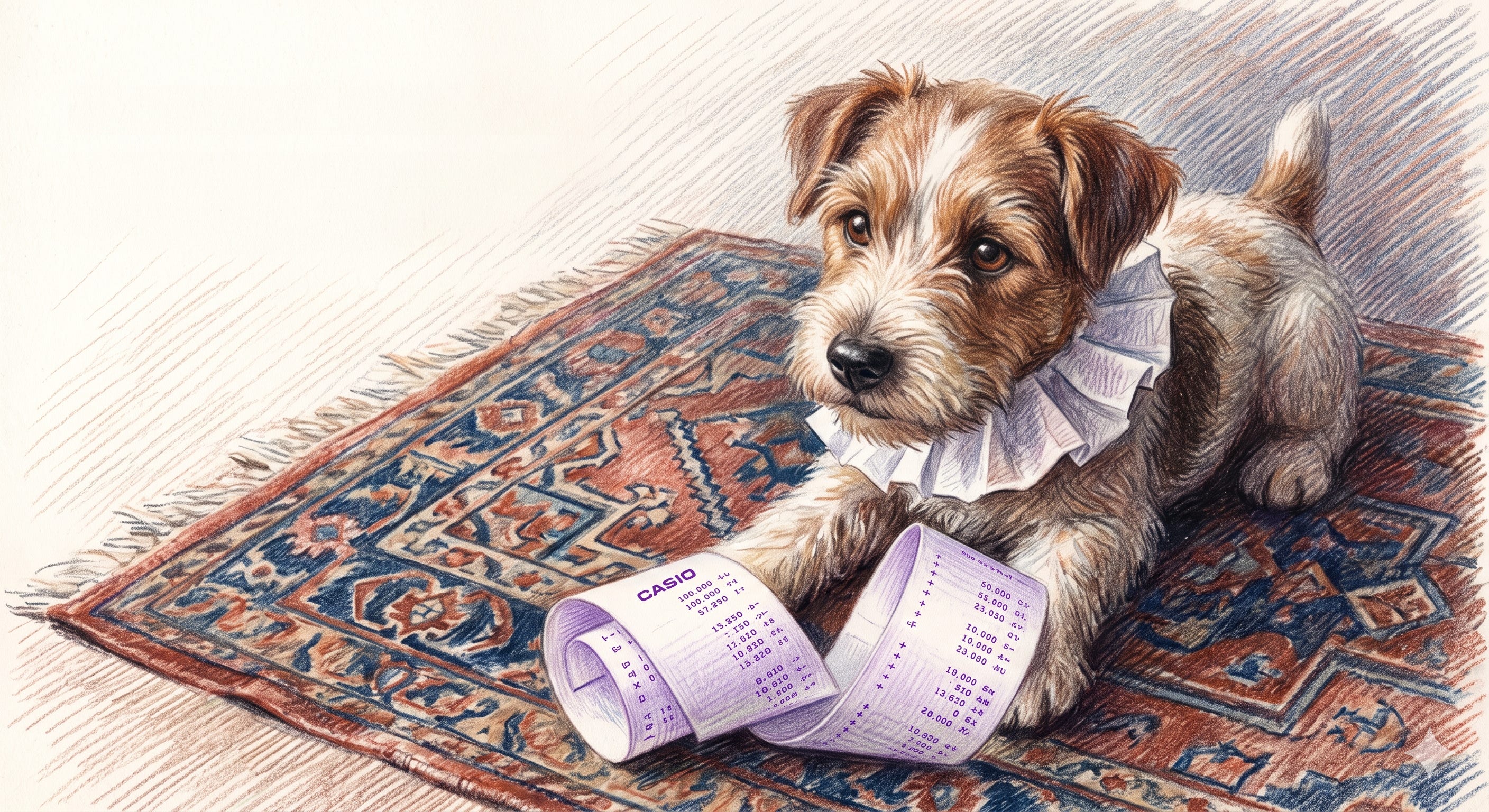
[SCENE: 11:45 PM. The kitchen. The fluorescent ring over the sink flickers once every four seconds. MR. PUNCH sits at the table with a yellow legal pad and a Casio printing calculator. MRS. JUDY stands at the sink, running a sponge around the inside of a pink ceramic bowl.]
MR. PUNCH
The disposal fee was eighty-five.
MRS. JUDY
Did you get the itemized printout for the Major Medical?
MR. PUNCH
No, that’s just for Henry’s equipment. The dog is out-of-pocket.
MRS. JUDY
He’s going to ask where the cart went.
MR. PUNCH
Tell him the Miller boys asked to borrow the wheels for their wagon.
MRS. JUDY
He’ll look for them through the glass.
MR. PUNCH
Then tell him they took it to the park. Tell him whatever keeps his head on the pillow until the physical therapist gets here at nine.
MRS. JUDY
(Setting the bowl in the drying rack)
The therapist called. She’s bumping her Tuesday rate to forty-five an hour.
MR. PUNCH
(The Casio prints a short line of purple ink)
Put it on the Visa.
MRS. JUDY
The Visa is at the ceiling, Arthur.
MR. PUNCH
Then put it on the Mastercard, Judy. Just turn the sink off. The pipes shake his floorboards.
In the late nineteenth and early twentieth centuries, the greatest insult a critic could hurl at a writer was the word sentimental. To the turn-of-the-century rebels and the early Modernists reacting against the Victorians, sentimentality was a predatory stimulation of emotion that explicitly absolved the audience of any moral obligation to act.
In 1841, Charles Dickens published The Old Curiosity Shop, featuring the death of Little Nell—an impossibly pure, sweet, patiently suffering child who slowly fades away. England lost its absolute mind. Fifty years later, Oscar Wilde would comment on the phenomenon:
“One must have a heart of stone to read the death of Little Nell without laughing.”
Why did Wilde say that? Because he recognized the con. He recognized that Dickens had constructed an emotional milking machine. The Victorian audience wept over a pure dead girl because the act of weeping made them feel like wonderful, Christian, empathetic people for the afternoon. Having secured that emotional payout, they could then step over an actual, living, scab-covered orphan sitting in the London gutter on their way to tea.
But there is a twist to this cynicism. When Dickens wrote that chapter in late 1840, he spent days wandering the streets of London in the early hours, sobbing into his coat over the memory of his wife’s dead seventeen-year-old sister, Mary Hogarth. He desperately believed that if he could just get the English to feel the agony of a dying child, their collective empathy would melt the Poor Laws.
There is tragedy to his genuine, naive heartbreak that a modern artist lacks. Today, we have the perspective to see that his strategy was doomed, and the theory to explain exactly why.
In his essay Everybody’s Protest Novel, James Baldwin went after Uncle Tom’s Cabin. He argued that Harriet Beecher Stowe’s book, widely credited with helping spark the abolitionist movement, was actually a catastrophic piece of moral cowardice.
“Sentimentality, the ostentatious parading of excessive and spurious emotion, is the mark of dishonesty, the inability to feel... the wet eyes of the sentimentalist betray his aversion to experience, his fear of life, his arid heart; and it is always, therefore, the signal of secret and violent cruelty, the mask of hatred.”
Baldwin’s accusation was that white readers wept over Uncle Tom being beaten to death because Tom died forgiving them. To him, Stowe’s implicit argument was: Look at Tom! He is more noble, more loyal, and more Christ-like than the white men beating him! How could you enslave a saint?
Baldwin asks the follow-up question: What if Tom wasn’t a saint? Would it then be okay to whip him?
By resting her moral argument on Tom’s flawless innocence, Stowe implicitly agreed with the slaver’s premise: that an ordinary, irritable, complex Black man does belong in chains. Sentimentality says: He is an angel, therefore we must spare him.
Why is the sentimentalist “always the signal of secret and violent cruelty”? Because sentimentality requires its object of pity to remain a prop. The sentimentalist loves the idea of the suffering victim because the suffering victim is passive, grateful, and makes the sentimentalist feel like a benevolent savior.
But what happens the moment the prop stands up?
The sentimentalist’s tears dry up immediately. The Victorian philanthropist who wept over Little Nell becomes the magistrate signing a hard-labor warrant for the starving child pickpocket. The Northern liberal who wept over Uncle Tom becomes the suburbanite cheering the police in Birmingham the moment a Black man demands a seat at the lunch counter instead of a place in heaven.
Pity is not the junior version of respect. It is the polite version of contempt.
In The Unbearable Lightness of Being, Milan Kundera defines Kitsch as the absolute denial of the shit of the world. He then explains how it works:
“Kitsch causes two tears to flow in quick succession. The first tear says: How nice to see children running on the grass! The second tear says: How nice to be moved, together with all mankind, by children running on the grass! It is the second tear that makes kitsch kitsch.”
The Second Tear is the collectivization of narcissism. The moment empathy becomes a group bonding activity, the actual object of the empathy becomes entirely irrelevant. The grass doesn’t matter; the children running on it don’t matter. What matters is the warmth of the shoulder pressed against yours in the bleachers.
This brings us back to Kundera’s definition: the absolute denial of shit. To get the Second Tear to flow across an entire population, the subject cannot smell. If a dying child voids her bowels in the bedsheets as her organs shut down from tuberculosis or if an enslaved man has rotting, gangrenous whip-wounds that attract blowflies and make the parlor stink, the Second Tear aborts.
Therefore, Kitsch requires a massive, silent sanitation department. Dickens has to scrub the sweat, the lice, the frantic animal terror, and the bedsores off Little Nell, leaving only a marble statue that breathes lightly. Stowe has to scrub the rage, the messy human spite, the sexual trauma, and the desire for vengeance off Uncle Tom, leaving only a dark-skinned Victorian curate.
The shit of the world is what demands actual moral labor.
Kundera is at this point writing as an exile from a Communist totalitarian state. His ultimate point about Kitsch is political: in the realm of kitsch, answers are given in advance and preclude any questions. Because the Second Tear is a pledge of allegiance to the tribe, refusing to cry is an act of treason.
If you sit in the Victorian parlor watching everyone weep over Little Nell, and you say, “This is badly written, manipulative drivel,” the room views you as a monster who wants children to die.
If you stand up in the 1852 Boston abolitionist salon and say what James Baldwin said—“This book is a cowardly refusal to treat Black people as human,”—the room views you as a cold, heartless cynic who doesn’t care about the slaves.
The ultimate power of Kitsch is that it weaponizes Goodness to protect the Status Quo.
Summary and Post-Script - Toby the Dog
Conditional Innocence: We observe how society reserves its loudest applause for the photogenic, and its protection for the infantilized.
Lazy Empathy: We trace the public preference for suffering pets to the cognitive economics of the social feed.
Biological Reflex: We demystify affective empathy as a nervous reflex, exposing the grueling cognitive labor required to actually love a human.
The Romantic Utilitarian: We expose the philosophical alliance of Utilitarianism and Romanticism, which together justify discarding human suffering to preserve the pleasant sensation of spontaneous benevolence.
The Empathy of Fiction: We interrogate the storytelling shortcut of the “Sick Pet Dog Test” to keep disabled characters consumable.
Finite Tragedies: We recognize that the societal romanticization of terminal illness and filicide is driven by a psychological demand for an exit to suffering.
Weaponized Pity: We deconstruct how sentimental kitsch sanitizes the reality of victims so the audience can bond over their self-righteousness while leaving the status quo untouched.
Post-Script
In the traditional English seaside puppet show of Punch and Judy, “Toby the Dog” sat on the playboard as a live, trained terrier. His dramatic function was to sit beside Mr. Punch, wear a small paper ruff, and bite the puppet on the nose for the amusement of the crowd, after which he was taken off the stage, fed a scrap of sausage, and placed back in his wooden travel crate.
Due to changing animal welfare standards in the late 20th century, the live dog has been almost entirely replaced by a glove puppet.