
I. Treating the Brain like a Muscle
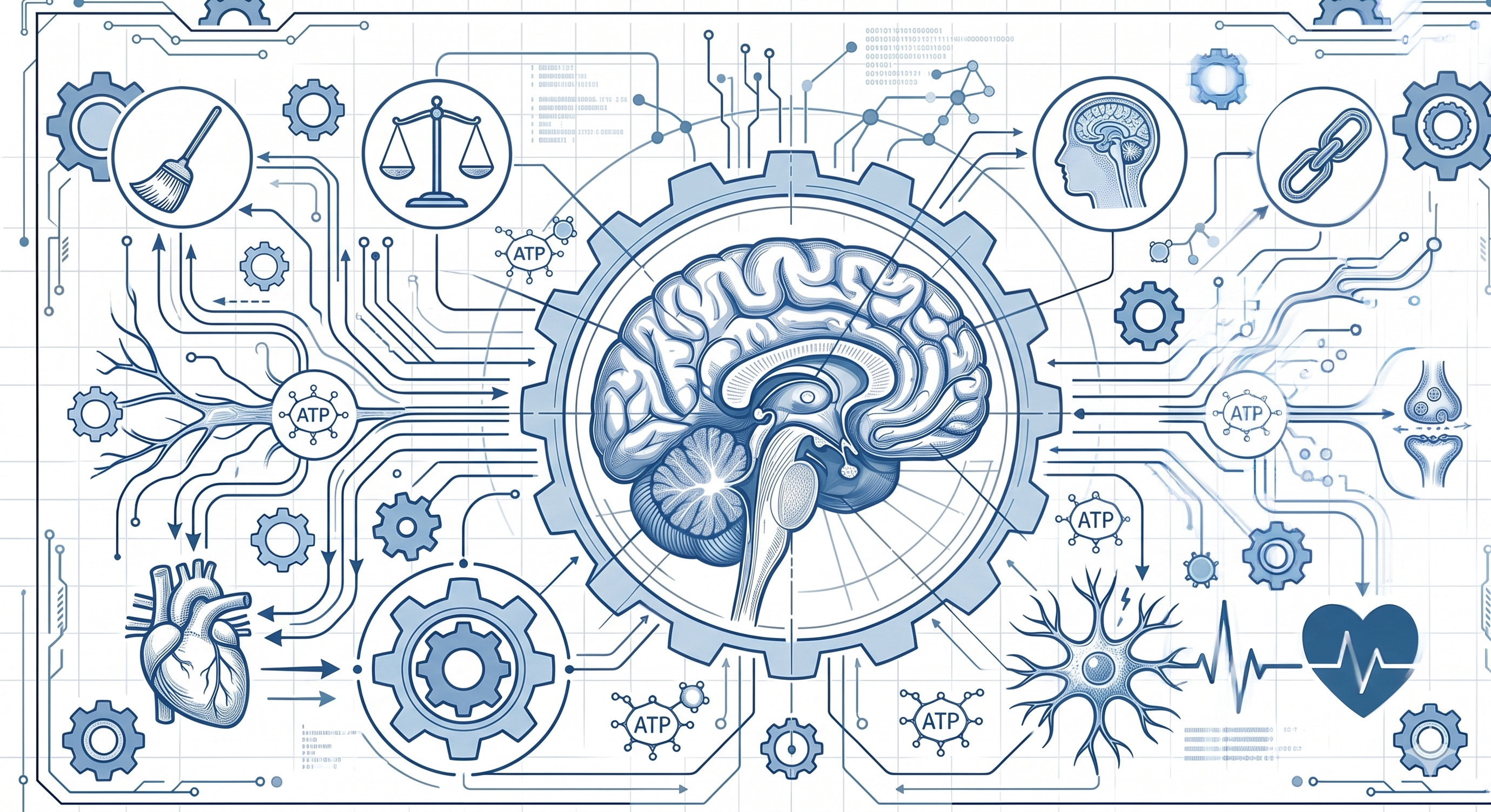
The brain makes up roughly 2% of your total body weight, but it consumes 20% of your resting energy in the form of glucose and oxygen. Every time a neuron fires, it burns cellular energy (ATP).
When you engage in deep, analytical focus—like debugging a tangled codebase, writing an essay, or parsing a complex financial model—you are placing a sustained load on specific neural networks, most notably the prefrontal cortex (executive function) and the anterior cingulate cortex (error detection).
Neurobiological studies show that prolonged, intense cognitive work leads to a rapid accumulation of glutamate (an excitatory neurotransmitter) specifically in the lateral prefrontal cortex. Your neurons produce metabolic byproducts when they burn ATP. As the chemical exhaust builds up, the brain recognizes that the local environment is becoming toxic. In response, it begins a neurochemical negotiation to force you to stop.
Motivation and focus are heavily modulated by dopamine. As glutamate accumulates and metabolic fatigue sets in, the brain down-regulates dopamine output for that specific task. The work suddenly feels heavier, slower, and significantly harder.
Simultaneously, the brain nudges you toward low-effort, high-reward activities—like checking a notification or opening a new tab. Just as physical pain stops you from lifting a weight that might tear a tendon, cognitive fatigue is the brain’s way of forcing a shut-down to prevent the toxic accumulation of metabolic waste.
When you push a muscle to failure—say, doing heavy deadlifts—you are creating physical micro-tears in the muscle fibers. Recovery requires the body to synthesize proteins and physically rebuild tissue. That repair takes 24 to 48 hours.
The brain does not work this way. While structural changes in the brain (like growing new dendritic spines) take time, the acute mental fatigue you feel at 2:00 PM is metabolic congestion.
Mental recovery is largely about chemical clearance and resetting, which happens on a much faster timescale. A 10-minute break does nothing to heal a torn bicep, but 10 minutes of walking, staring out a window, or closing your eyes can rapidly clear a significant portion of the neurochemical exhaust clogging your prefrontal cortex.
Before you get too excited, we still need sleep.
The brain operates in a closed environment, to get rid of waste it relies on Glymphatic System (a portmanteau of glial cells and the lymphatic system).
This system barely runs while you are awake, and it does not turn on simply because you lie down horizontally. It is triggered by the delta waves of deep, Slow-Wave Sleep. During this stage of sleep, the glial cells in your brain shrink in volume by up to 60%. This creates wide channels in the tissue, allowing cerebrospinal fluid to wash through the brain, sweeping away the day’s accumulation of glutamate, adenosine, and amyloid-beta, flushing them into your bloodstream to be processed by your liver.
You cannot hack this requirement. If you truncate your sleep, you wake up with a backlog of metabolic exhaust still sitting in your prefrontal cortex. That lingering waste is what you experience as brain fog.
II. The Illusion of Mental Fatigue
Sleep is the bottleneck for chemical clearance. Lying down might be good for your heart and blood pressure; but it does nothing for the maintenance of your brain. The wash cycle of the glymphatic system does not trigger because your eyes are closed. It requires the precise stages of sleep.
Just as a torn muscle synthesizes protein and physically rebuilds while you rest, memory consolidation and pruning, the functions of learning, and neuroreceptor upregulation happen while you are unconscious.
This is why extreme polyphasic sleep schedules—like the Uberman routine, which attempts to compress sleep into 20-minute naps every few hours—fail over the long term. They truncate the continuous cycles required to drop into the deep Slow-Wave Sleep (SWS) that triggers cellular clearance. When people boast about functioning on four hours of fragmented sleep, they are often confusing the high adrenaline of chronic sleep deprivation with baseline energy.
However, macro-clearance is only half the equation, even with a perfect eight hours of sleep, you cannot sustain high cognitive output indefinitely. The brain requires frequent, short clearances while awake. This is where we run into the limits of the human nervous system: the brain lacks the hardware to tell you it is tired.
When you lift a heavy weight, you receive immediate, undeniable physical feedback. You experience nociception (pain), the localized burn of acidosis and inorganic phosphate, and eventual mechanical failure. Your arms or legs give out.
The brain completely lacks nociceptors. It cannot feel pain from overuse, and your prefrontal cortex cannot physically collapse. Mental fatigue instead often masquerades as emotional and behavioral shifts. You rarely think, “My anterior cingulate cortex is depleted of ATP.” Instead, the fatigue presents as an illusion.
Sudden, inexplicable irritability. A profound, artificial sense of boredom. An overwhelming, physical urge to context-switch—opening a new tab, checking your phone, or pacing the room. These are not moral failings or a lack of discipline. They are the UI warnings of a system that cannot communicate through pain or visible loss of function.
The brain is not singular or unified. Analytical focus heavily taxes the prefrontal cortex (executive function) and the anterior cingulate cortex (error detection). If you spend four hours debugging code or outlining an essay, those specific neural hubs become metabolically exhausted. However, your motor cortex and auditory processing centers might still have plenty of localized energy. This is why you can feel completely paralyzed at the thought of writing one more email, but still have the energy to go for a five-mile run or play a video game.
There are several ways here that “taking a break” can go wrong. If your executive function is flagging, opening YouTube or scrolling social media feels like rest because it does not require complex problem-solving. But neurologically, it is not recovery. Scrolling still demands rapid visual processing, constant micro-decisions, and frequent dopamine spikes. You are shifting the load to a different part of the engine while keeping the system running red-hot. It feels easy because it relies on bottom-up processing (bright colors, movement, and variable rewards hijacking your attention) rather than top down processing.
True meso-recovery requires “powering down” the cognitive machinery. Working with your biological constraints—such as Ultradian rhythms, which suggest roughly 90 minutes of focused effort followed by 20 minutes of rest—aligns with the brain’s need to allow local astrocytes (glial cells that maintain brain homeostasis) to clear synaptic glutamate and allows dopamine and norepinephrine receptors to re-sensitize
But that 20-minute rest must be genuine. It looks like walking, staring out a window, or closing your eyes. It requires allowing the nervous system to shift from the sympathetic drive (fight-or-flight focus) into the parasympathetic state. This drops the heart rate, down-regulating sympathetic arousal and halts the release of acute stress catecholamines (hormones and neurotransmitters produced by the adrenal glands).
III. Sleep, Health, and Pseudo-Sleep
We tend to treat the brain as an isolated engine, but it is inextricably plumbed into the rest of the body. Once the glymphatic system flushes neurochemical exhaust out of the neural tissue, that waste drains into the lymphatic vessels and into the bloodstream.
You cannot force the brain’s clearance systems to fast-forward, but you can remove the downstream bottlenecks. Aerobic fitness directly influences cerebral perfusion—the flow of blood to the brain. A stronger heart and highly elastic blood vessels mean oxygen and glucose are delivered more efficiently during intense thought, and metabolic waste is carried away more rapidly when it hits the bloodstream.
If your health is compromised, your clearance is sluggish, which indirectly backs up the brain’s ability to recover. Even biomechanics play a role: restricted cervical vessels from poor neck posture can physically impede the drainage of cerebrospinal fluid.
Why do some executives claim to thrive on five hours of sleep while you require eight? A fraction of the population possesses specific genetic mutations (such as the DEC2 or ADRB1 genes) that grant them a more efficient glymphatic wash cycle. They do not require less recovery per se; these genes regulate orexin (a wakefulness neuropeptide), altering their circadian timing and making their memory-consolidation pathways resilient to sleep deprivation.
For the rest of the population, the variation in required sleep comes down to the efficiency of dropping into and sustaining Slow-Wave Sleep (SWS). If your sleep architecture is highly efficient, you might feel fully recovered in seven hours. But if your sleep is fragmented by baseline stress, poor cardiovascular health, or an evening drink, you suffer micro-awakenings. You might require nine hours in bed just to accumulate the same amount of cleaning time. Furthermore, as we age, our brains naturally produce fewer of the slow delta waves required to trigger this wash cycle, extending our recovery timelines.
This also answers a persistent question: Why does a heavy thinking day make me want to sleep?
Every time a neuron fires, it burns cellular energy (ATP—Adenosine Triphosphate). When the energy is burned, the A (adenosine) is left behind as metabolic waste. The harder you think, the faster you burn ATP, and the more adenosine accumulates in your brain. This adenosine binds to specific receptors that inhibit wakefulness, a mechanism known as homeostatic sleep drive or sleep pressure.
During sleep, adenosine levels drop quickly. However, if you refuse to clear the backlog and instead operate in a state of chronic sleep deprivation, the brain adapts by upregulating (increasing the number of) its adenosine receptors. It becomes hyper-sensitive, meaning you feel sluggish even when your adenosine is normal throughout the day.
We also underestimate the baseline energy the brain spends simply rendering reality. A large portion of your cerebral cortex is dedicated to processing visual and auditory data. Even when you are resting in a quiet, brightly lit room, your brain is burning ATP to parse the hum of the refrigerator, the glare from the window, and the pressure of the chair against your back.
This explains the utility of R.E.S.T. (Restricted Environmental Stimulation Therapy), more commonly known as float tanks. By removing gravity, light, and sound, you remove inputs to the somatosensory, visual, and auditory cortices and create a drop in ambient metabolic demand. However, because the brain is a prediction machine that craves input, if you minimize expenditure for too long (such as prolonged isolation in an anechoic chamber), the system will invent its own sensory inputs, resulting in hallucinations. We cannot turn the machine off; we have to manage the load.
Ultimately, most productivity advice tends to focus on supporting routines—how to sleep better or control stress. Secondary advice exists on how to focus or improve impulse control, but it often lacks a unifying biological theory.
To actually engineer mental acuity, we must approach the system holistically. This brings us to the framework of cognitive performance: The Three-Legged Stool. Broadly speaking, every mechanical intervention we have discussed, and every tool required to sustain high output, falls into one of three operational categories:
Maximizing Available Mental Resources: Improving the baseline supply of ATP, dopamine, and cerebral perfusion (e.g., cardiovascular health, aligning circadian rhythms).
Minimizing Unnecessary Expenditure: Reducing the metabolic cost of operation (e.g., removing ambient sensory load, avoiding context-switching, and myelinating neural pathways through focused repetition).
Recovering Mental Resources: Efficiently clearing metabolic exhaust (e.g., 20-minute meso-recoveries, 90-minute Ultradian cycles, and Slow-Wave Sleep).
IV. The Power of Feedback
To control any system you need feedback.
If we accept the premise of the Three-Legged Stool—that we must maximize resources, minimize expenditure, and manage recovery—we need a way to measure the current state of the engine.
When you are engaged in deep work, your Executive Control Network (ECN) is active. This network requires metabolic fuel to keep you on task. Crucially, a large portion of this energy is spent on inhibitory control—applying the brakes to distractions, external stimuli, and unrelated thoughts. When you stop focusing, the Default Mode Network (DMN) takes over. This is your brain’s idle engine. It is the network responsible for daydreaming, ruminating, self-reflection, and stray thoughts.
Acting as the bridge between these two states is the Salience Network (SN). Its primary job is to monitor sensory data and internal signals to decide what deserves your attention. When the SN identifies a stimulus as salient—be it an urgent email or a sudden hunger pang—it acts as a dynamic toggle, signaling the brain to downregulate the DMN and recruit the ECN to handle the task at hand.
This tri-network interaction explains a paradox of mental fatigue: A noisy, racing mind is not a sign of hyper-activity; it is a sign of metabolic depletion. When you are cognitively exhausted, you lose the capacity for inhibitory control, and the Salience Network’s ability to switch effectively begins to fail. Because the ECN can no longer hit the brakes and the SN cannot maintain the boundary between states, the DMN begins leaking into your conscious awareness, leaving you stuck in a state of distracted, unproductive mental noise.
Consider then the following diagnostic tool for interoception, Open Monitoring.
We isolate the senses as much as possible. Close the eyes or use a blindfold. Put on noise-canceling headphones. Sit or lie in a neutral, comfortable position. The goal is to do absolutely nothing for one minute. Do not try to clear your mind; simply watch the thoughts that appear without engaging them. We hold this state for 60 seconds.
You pass if thoughts drift in, but they feel loose, abstract, and random. You feel physically comfortable sitting in the dark. You could easily stay there for another five minutes. You fail if your thoughts are incredibly fast, aggressive, or strictly tied to the work you were just doing. You feel a visceral, physical agitation—an intense, buzzing urge to pull off the headphones, check your phone, or move your body.
If you fail this test, the system requires intervention. But what is the proper intervention? We cannot trigger a glymphatic wash cycle in the middle of the workday after all. We need a hierarchy of recovery.
Micro-Recoveries (1 minute): A neurological breather that acts as a localized reset. This brief window allows the astrocytes to restore their sodium gradients. Simultaneously, it allows the astrocytic calcium waves to trigger local blood vessel dilation.
Meso-Recoveries (20 minutes): This is enough time for the parasympathetic nervous system to clear acute adrenaline, halt the ongoing secretion of cortisol, and allow local neuronal pools to begin resetting.
Task-Switching (Calling it a Day): If a 20-minute meso-recovery does not clear the agitation, the local networks are flooded with glutamate and experiencing a ATP supply-demand mismatch, pushing further causes collateral damage (frustration, sloppy errors). Moving on to a low-cognitive-load task shifts the burden to different neural networks.
There are consequences to pushing too hard. To protect itself from the chronic flood of stress hormones (cortisol) required to force focus, the brain eventually shuts down its reward circuitry, blunting the dopamine receptors. This is the mechanics of burnout: what manifests psychologically as apathy, anhedonia, or executive dysfunction is caused by sustained allostatic load.
V. The Control Theory of Recovery
Psychology is emergent neurology. While the boundary between the two is one of shifting scientific consensus, for the purposes of engineering human performance, we are treating psychological symptoms as the superstructure of an underlying biological base.
It is important to acknowledge the limits of this framework. Psychological conditions, such as depression or trauma, defy simple mechanical solutions. Their roots are deeply tangled in genetics, environment, and complex developmental histories. However, when dealing with mechanical burnout—the apathy, anhedonia, and executive dysfunction caused by sustained allostatic load and the downregulation of dopamine receptors—we have a defined mechanism. And a defined mechanism invites a mechanical solution.
When faced with this mechanical burnout, the modern impulse is to reach for a chemical fix. This leans heavily into the nootropic craze, which treats the brain like an internal combustion engine: add a specific additive to achieve a specific performance boost.
Consider the common advice to lower cortisol. Because chronic cognitive exertion bathes the brain in cortisol, the logical leap is to take a supplement like Ashwagandha to suppress it. But the brain is an interconnected web, and pulling on one chemical string inevitably tangles three others. There are both unintended consequences and compensatory mechanisms.
One unintended consequence is that while you might feel less anxious, you will also feel lethargic, unmotivated, and flat. Cortisol is a mobilizing hormone. You require a massive spike of cortisol in the morning (Cortisol Awakening Response) simply to get out of bed and feel alert. If you use a nootropic to artificially suppress cortisol because you feel stressed, you are blunting your body’s primary mechanism for mobilizing energy.
Furthermore the system pushes back against the intervention to maintain homeostasis. In case of Cortisol, the precise mechanism is clear. Cortisol operates on a negative feedback loop: the hypothalamus signals the pituitary, which signals the adrenal glands to release cortisol. When cortisol levels rise, they signal the brain to shut off production. If you use an adaptogen or nootropic to flatten your cortisol curve, the brain senses the deficit and upregulates stress signals to compensate.
From an engineering perspective, external interventions like nootropics—or even a cup of coffee—are blunt actuators. You cannot tell an Ashwagandha capsule to strictly lower cortisol in your amygdala while leaving your prefrontal cortex alert and mobilized. The chemical intervention is systemic. It hits everything at once. It is a sledgehammer when the system requires a scalpel.
If external means are too blunt, internal means suffer from a lack of specificity. The Open Monitoring test discussed in the previous section is a useful diagnostic, but it is a low-resolution sensor. By paying close attention, you might notice that your mind is racing or that you feel a visceral agitation. But your internal sensors cannot provide precise telemetry.
We are left attempting to manage an incredibly complex machine using low-resolution sensors and blunt actuators. But the fatal flaw in this approach is lag. By the time you fail the 60-second diagnostic test—you might have unknowingly been doing bad work for hours. If your dopamine receptors have downregulated, taking a two-week vacation will not instantly fix the hardware. Neuroplasticity and receptor upregulation require weeks, if not months, of sustained recovery. This represents two distinct sides to lag, the delay between a change in the system and the sensor detecting it, or the delay between an actuator firing and the system correcting.
If our sensors are imprecise, our tools are blunt, and our feedback loops are severely delayed, reactive management of mental exertion leaves much to be desired. Relying on how you feel to decide when to rest is a form of Feedback Control—waiting for an error to occur in the system before applying a correction. The next stage then, is to consider Feed-Forward Control: predictive modeling.
VI. The Institutional Blindspot
In the realm of human performance, the state-of-the-art for Feed-Forward Control is found in chronobiology. Elite military units, aviation authorities, and professional athletic organizations use predictive physiological frameworks, the most prominent of which is the Two-Process Model of Sleep Regulation.
This model dictates that your baseline alertness is governed by the continuous interaction of two predictable variables:
Process S (Sleep Pressure): The exponential accumulation of adenosine in the brain. The longer you are awake, the heavier the chemical load.
Process C (Circadian Rhythm): The biological oscillator that sends alerting signals—such as cortisol spikes and core temperature increases—to keep you awake. These signals peak and dip at highly predictable intervals dictated by your internal master clock (the suprachiasmatic nucleus).
By graphing the accumulation of Process S against the fluctuating waves of Process C, institutions can mandate rest schedules based on the math, not the morale of the operator. However, understanding the mechanics of sleep is only half the battle; one must also account for how the brain responds to the rhythm of work itself.
Biological systems habituate to constants. If you apply a linear stress, the brain’s receptors downregulate to ignore the constant stimulus, leading to an exponential decay in acuity. Models of biological systems suggest the solution must be an oscillator: high-amplitude spikes of sympathetic drive (deep focus) followed by forced, deliberate troughs of parasympathetic recovery (rest)
This oscillatory demand creates a lag time in adaptation that most individuals fail to anticipate. Chronobiology provides a very specific timeframe in the context of the circadian rhythm: it takes 14 to 21 days of holding a strict schedule before you can trust the data.
Days 1–4 (The Novelty Illusion): A new schedule is perceived as a novel stressor. The HPA axis releases a mild surge of adrenaline and dopamine. You feel artificially sharp. If you evaluate the schedule here, you are measuring the stress response, not the routine’s efficacy.
Days 5–10 (The Desynchronization Noise): Your brain’s master clock adapts to light quickly, but your peripheral clocks (the circadian rhythms in your liver, digestion, and localized neural networks) take much longer. Your systems are fighting each other, resulting in sluggishness.
Days 14–21 (Phase Alignment): Only after two to three weeks do the peripheral clocks align with the master clock, and neurotransmitter receptors upregulate or downregulate to the new baseline.
If this science is so well-established, why are knowledge workers—programmers, academics, financial analysts—still relying on coffee and sheer willpower?
Because cognitive decay is invisible. Institutional models like SAFTE (Sleep, Activity, Fatigue, and Task Effectiveness) are accurate at predicting Psychomotor Vigilance—how fast you can press a button when a light flashes. They are much less useful at predicting Executive Function or Emotional Intelligence (EQ) which suffer the from lack of measurability. This compounds the problem of the prefrontal cortex, which governs complex decision-making and impulse control, being the most fragile network in the brain. It is the very first part of the system to degrade under fatigue, long before motor skills fail.
Furthermore, real-world stressors contaminate the data. A surgeon operating at hour 24 of a shift might test as severely impaired on a tablet game, but the moment a patient’s vitals crash, a massive adrenaline and norepinephrine dump bypasses the adenosine block by recruiting emergency neural circuits to force the system awake. Many mistake this crisis-driven adrenaline for sustainable productivity.
Instead of engineering optimal output, institutions rely on the worship of genius and output at any biological cost.
We romanticize the programmer coding for 72 hours straight or the academic pulling three consecutive all-nighters. We reward the output while ignoring the biological reality that their best, most associative insights—the true Eureka moments—almost certainly occurred when their Default Mode Network was active. They did not solve the complex problem by staring harder at the screen; the breakthrough happened when they stepped away to take a shower, go for a walk, or rest, allowing the brain to finally link the data. Because there is no simple right answer or reaction time to measure in knowledge work, institutions ignore the decay of the hardware.
VII. Two Modes of Meditation
If institutional models are blind to the invisible decay of the prefrontal cortex, the burden falls on the individual. This requires precise, secular tools. Unfortunately, the tool most commonly prescribed for this task—meditation—is suffocated by mysticism.
Because science was historically unable to extract concrete, measurable data from the meditative state, the language of mysticism was allowed to persist. We are told to “find our center” or “vibrate at a higher frequency.” But mysticism was simply the best language ancient engineers had to describe internal neurochemical states before the invention of the fMRI.
Using the word meditation as a catch-all solution is as useless as saying ‘I do sports.’ Are you playing chess, or are you playing full-contact rugby? The physical and neurological demands are entirely different.
Neurologically, meditative practices fall into one of two distinct modes:
1. Focused Attention (The Spotlight) This is the act of forcing your Executive Control Network (ECN) to hold a single point of focus—such as the sensation of your breath—while actively suppressing the Default Mode Network (stray thoughts). This is not rest. It is highly metabolically expensive. It is essentially weightlifting for your prefrontal cortex. In the context of our framework, Focused Attention belongs strictly to the first two legs of the stool: maximizing available resources (building the muscle of the ECN) and minimizing expenditure (training inhibitory control to ignore distractions).
2. Open Monitoring (The Blank Slate) This is the 60-second exercise we discussed in Part IV. You do not focus on anything; you simply observe whatever sensory data or thoughts arise without attaching to them or following their logic. Science can now watch in real-time as this protocol physically down-regulates the posterior cingulate cortex (PCC). While the medial prefrontal cortex might still generate a stray thought, the deactivated PCC prevents you from attaching to it. You decouple the narrative thought from the emotional self. Open Monitoring is the diagnostic mode. It is the core tool for the third leg of the stool: meso-recovery and system feedback.
Once we strip away the mysticism, other esoteric practices reveal their mechanical utility.
Take the body scan meditation, where practitioners slowly focus on different limbs. Mechanically, this is simply high-resolution interoceptive mapping. You are forcing the ECN to systematically scan the somatosensory cortex to identify physical stress responses before they trigger a psychological UI warning (anxiety).
Or consider the practice of visualizing a painful past event or a social taboo. In clinical psychology, this is known as Cognitive Reappraisal or Systematic Desensitization. When a memory is stored, it is consolidated via protein synthesis. When you recall a memory
the neural trace becomes labile and needs to be reconsolidated. By bringing up a painful memory in a safe environment, the memory is reconsolidated with a weaker amygdala (fear) tag. In the context of the Stool, this is a form of Minimizing Expenditure. You are permanently deleting background processes that silently drain ATP via chronic anxiety.
But the most profound mechanical intervention comes from the realm of Zen Buddhism: the paradox.
Mystics call these paradoxes Koans—questions like, “What is the sound of one hand clapping?” or “What was your original face before your parents were born?” Monks are told to meditate on these riddles to achieve enlightenment.
Neurologically, a Koan is a highly calculated circuit breaker.
Your Executive Control Network is a logic engine. It is desperate to close loops, solve problems, and predict outcomes. When you feed it a paradox, you are feeding it an unsolvable loop. As you sit and try to “work through” the Koan, you are coupling the ECN with the DMN, retrieving memories and running simulations to find an answer that does not exist.
You are intentionally triggering a buffer overflow.
The ECN spins the cognitive hamster wheel faster and faster, burning ATP trying to parse the fractured logic. Because the loop cannot be closed, the Salience Network realizes the cost is unsustainable. It disengages the ECN and the logic engine halts. The brain is dropped from a of state top-down prediction to pure bottom-up sensory processing. The Koan is a brute-force method of achieving Open Monitoring. The enlightenment or sudden, transcendent clarity reported by practitioners is not because they successfully solved the paradox. It plunges them past the UI and into the raw sensory hardware.
VIII. Sitting on the Stool
Any attempt to optimize a system while ignoring one of its load-bearing components will lead to collapse. You cannot use a Zen paradox to out-meditate an accumulation of adenosine, just as you cannot use a 90-minute nap to fix poor cardiovascular perfusion.
To engineer sustainable mental acuity, we must sit squarely on all three legs of the stool:
Maximizing Available Resources (Building the baseline supply of ATP, dopamine, and systemic health).
Minimizing Unnecessary Expenditure (Training inhibitory control, myelinating pathways, and closing open cognitive loops).
Recovering Mental Resources (Deploying precise micro-, meso-, and macro-clearances).
Putting it all together means building a personalized schedule. Unless your work has the predictable physical metrics of a military operation, your protocol cannot be copied from a productivity guru. It must be engineered.
Consider the following seven part checklist as a way to ensure your system is sound.
1. It Must Fit Your Needs There is no universal template. Your routine must account for the specific demands of your daily load. A programmer writing complex logic requires a different ratio of Focused Attention to Open Monitoring than a manager whose day is defined by constant context-switching and emotional regulation.
2. It Must Account for Sleep The wash cycle cannot be bypassed. Your routine must respect the Two-Process Model, aligning your highest cognitive loads with the peaks of your Circadian Rhythm (Process C) and safeguarding your Slow-Wave Sleep to clear the inevitable accumulation of Sleep Pressure (Process S).
3. It Must Account for Health Your protocol must recognize that the brain is plumbed into the body. Cardiovascular health is the downstream plumbing required for cerebral perfusion.
4. It Must Audit Motivation and Maintain Flexibility Because the brain down-regulates dopamine in response to localized metabolic exhaustion, your protocol needs the flexibility to pivot.
5. It Must Respect Ashby’s Law Your protocol must be complex enough to be theoretically viable. Simple, blunt interventions (like drinking coffee to suppress an adenosine backlog) result in compensatory pushback. A complex machine requires a nuanced, multi-tiered manual.
6. It Needs to be Habit Building Once you set your routine, you must lock the variables for weeks at least. If you can’t consider it a habit then your routine needs reconsidering.
7. It Must Deploy Secular Tooling Your routine can utilize the variety of tools available without relying on mystical hope. Whether you are using Open Monitoring to test your Salience Network or employing cognitive reappraisal to edit an emotional response, treat your tools as what they are: interventions designed to manipulate a physical substrate.
We spend our lives attempting to out-think our own biology, wielding guilt and willpower as our primary tools. But the brain is not a phantom entity floating above the physical world; it is a wet, pulsing, electrically charged engine subject to the strict laws of thermodynamics and metabolism.
When you strip away the productivity guilt and the mystical jargon, you are left with something immensely powerful: a machine. And a machine, no matter how complex, can always be engineered.